A Litigation Chamber, Built Around the Courtroom
Six core practice groups, each supported by dedicated pages explaining the law as it stands today — the Bharatiya Nyaya Sanhita and BNSS, with the older IPC and CrPC equivalents noted throughout.
Criminal Defence
Trials, appeals and quashing — offences under the BNS and IPC, POCSO and economic offences.
Explore →Bail & Anticipatory Bail
Regular, anticipatory, interim and default bail — Sections 478–483 BNSS, before Sessions Courts and the High Court.
Explore →Matrimonial & Family
Divorce, maintenance, custody, domestic violence and proceedings under Section 498A IPC / 85 BNS.
Explore →Civil & Property
Title, partition and possession suits, injunctions, specific performance, recovery and execution.
Explore →Corporate & NCLT
Company disputes, insolvency petitions under the IBC, commercial suits, arbitration and MSME recovery.
Explore →Cyber & Online Fraud
UPI and banking fraud, identity theft and frozen-account remedies under the IT Act and BNS.
Explore →How Your Matter Proceeds
A clear, staged method — no shortcuts promised and no outcomes guaranteed. Results in litigation depend on the facts, the evidence and the court.
Consultation
Facts, documents and a conflict check, followed by a candid first assessment.
Case Assessment
Study of the record, the applicable statute and the procedural position of the matter.
Strategy & Drafting
Pleadings, petitions and applications drafted with the hearing in mind.
Representation
Personal appearance and argument at every effective hearing.
Judgment & Appeal
Execution of orders, or appeal and revision where the matter warrants it.
From the District Courts to the Supreme Court
The chamber appears across every tier of the system. Select a court to read about the work done there and the districts it serves.
IPC → BNS Section Converter
India's new criminal codes came into force on 1 July 2024. Type an old section number to see its equivalent under the Bharatiya Nyaya Sanhita or the BNSS — a quick reference maintained by the chamber.
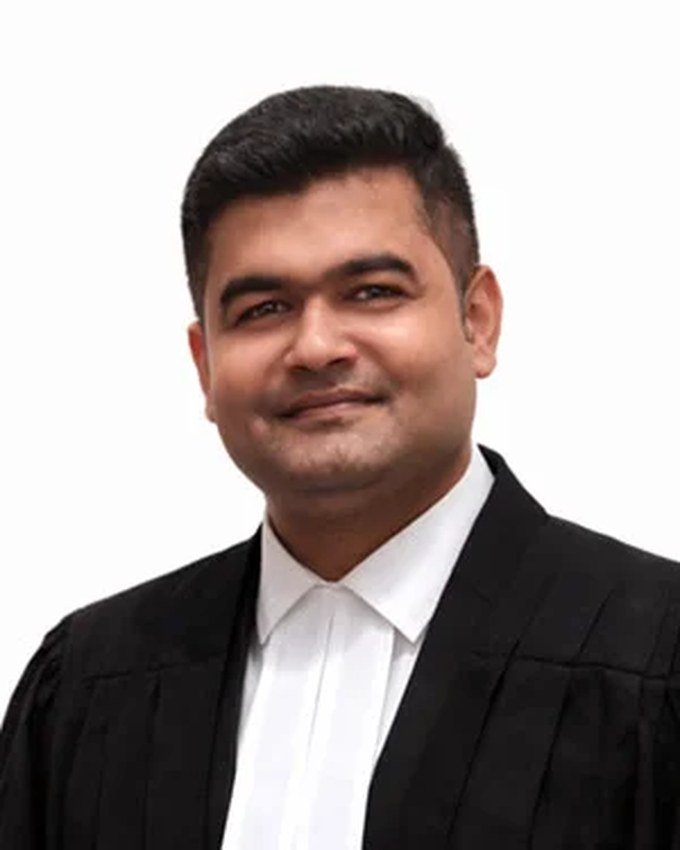
Advocate Manish Jha
A litigation practitioner based in New Delhi with over fifteen years at the Bar, holding LL.B. and LL.M. degrees. The chamber's method is straightforward: close reading of the record, research on the applicable law, and preparation before every hearing.
Clients are given a realistic view of their matter at the outset — including its weaknesses — and are kept informed at each stage of the proceeding.
Frequently Asked Questions
Which courts does Advocate Manish Jha appear in?
The chamber appears before the District Courts of Delhi — Tis Hazari, Karkardooma, Patiala House, Saket, Rohini and Dwarka — as well as Tribunals such as the NCLT and MACT, the High Court of Delhi, and the Supreme Court of India.
What types of matters does the chamber handle?
The practice covers criminal defence and bail, matrimonial and family disputes, civil and property litigation, corporate and commercial matters including NCLT proceedings, and cyber and economic offences.
Does the IPC still apply to my case?
If the offence is alleged to have been committed before 1 July 2024, the Indian Penal Code and the CrPC continue to govern it. Offences alleged to have been committed on or after that date are dealt with under the BNS and BNSS. The chamber advises and appears under both regimes.
Where is the chamber located?
The chamber is at E-397, 4th Floor, Tagore Garden Extension, New Delhi – 110027, a short distance from Tagore Garden metro station on the Blue Line. It can be reached at +91 98738 50301 or legal@advocatemanishjha.com.
Does the content of this website amount to legal advice?
No. The content of this website is general information about the law and about the chamber. It is not legal advice, and no advocate-client relationship arises from reading it or from contacting the chamber.
Chamber of Advocate Manish Jha
E-397, 4th Floor, Tagore Garden Extension, New Delhi – 110027
Near Tagore Garden Metro Station (Blue Line) · Consultations by prior appointment